

Seeing RED
led me to BLUEBERRIES. You should read this.

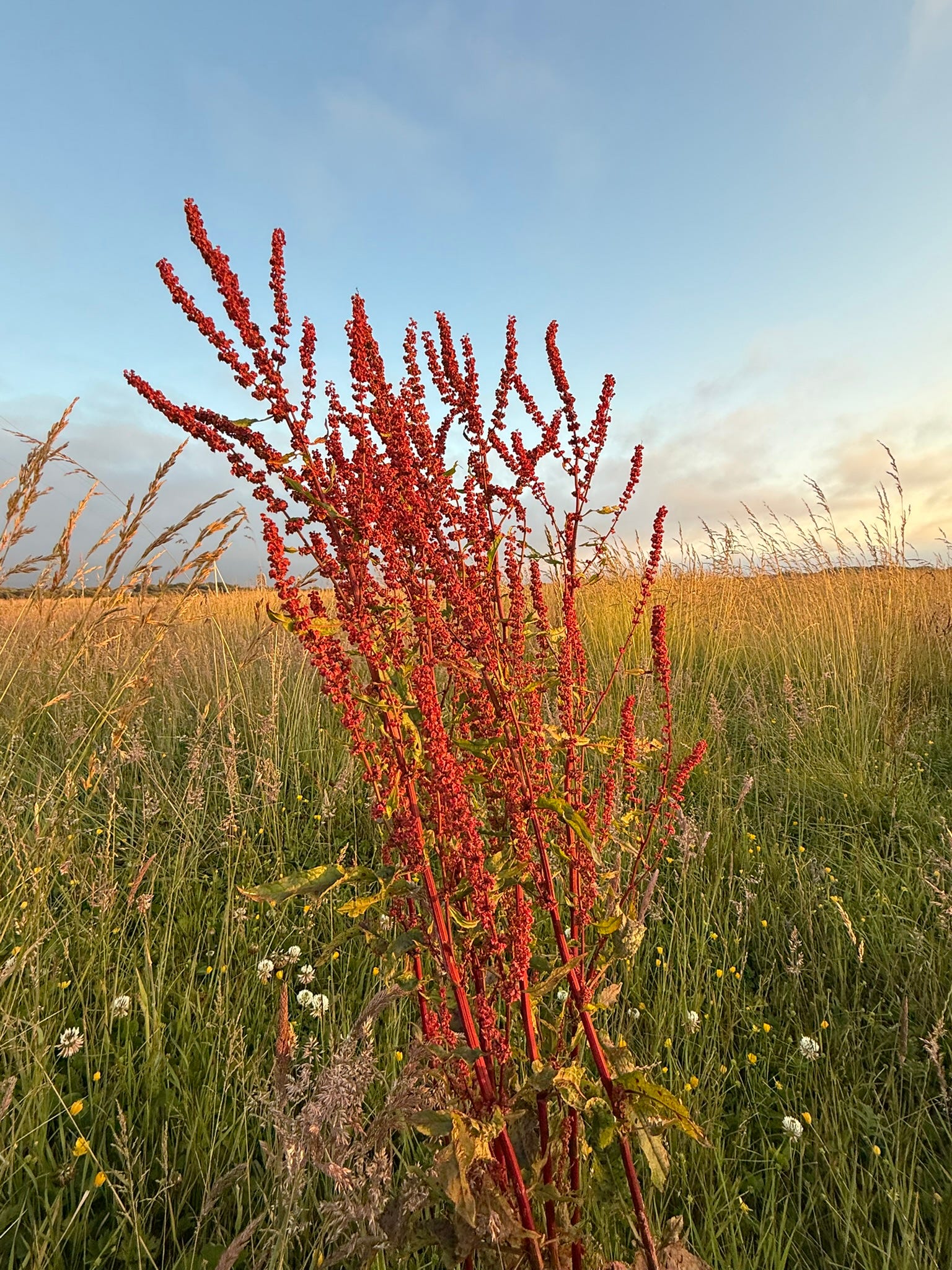
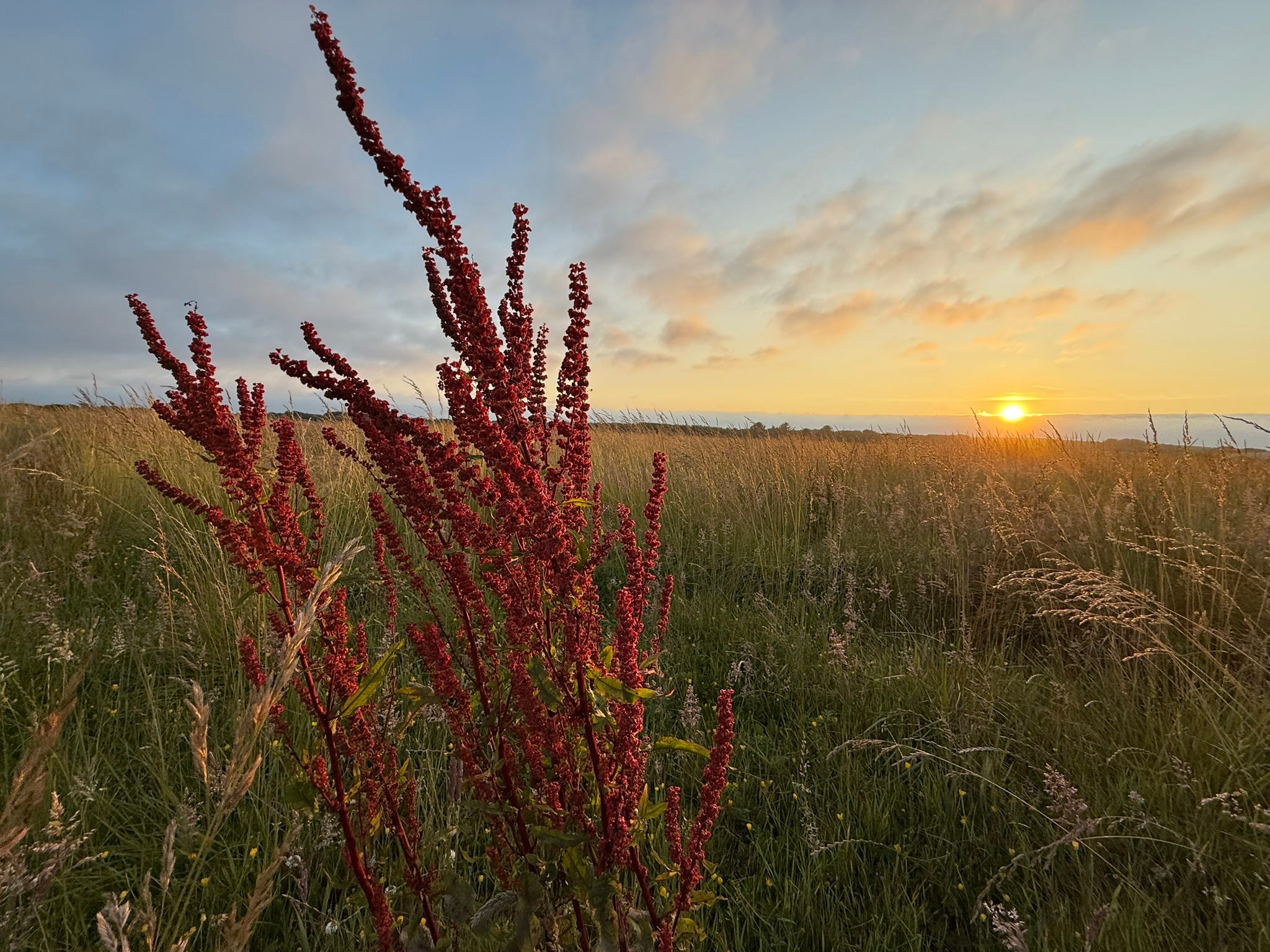
I was riding my bike the other night and had to stop and admire the red beauty of this lone curly dock (Rumex crispus) that contrasted beautifully with the rest of the hay field in the golden light. Geesh, gorgeous.
Then, this morning, I was riding my bike again alongside the rising sun and this weedy geranium’s leaves (below) attracted my attention. I stopped my bike again.
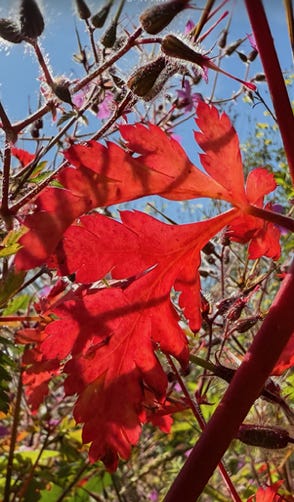
Natural pigments! Stunning. And they’re more than just living art.
Anthocyanins come in reds, blues, and purples and are common in flowers, fruits, and stems. Carotenoids come in reds, oranges, and yellows and are visible in leaves after green chlorophyll has broken down.
Besides adding fabulous splashes of color to the scenery of our lives, they are known to have potential health benefits when we eat them. Purported positive benefits include reduction of free radical damage, cellular mutations, and chronic inflammation. Heck yeah! I’m in! They can also prevent, reduce or even stop progression of many non-communicable and degenerative chronic disorders.
Americans, in particular, should eat more of these. Here’s why.
In Europe and the Mediterranean region, people eat way more natural pigments than Americans. For example, in Spain, people are eating an average of 18.4 mg per day, but in Italy, they’re eating 64.9 mg per day on average. (Fresh colorful fruit and red wine.) In the United States, the average is about 12.5 mg per day. (Cereal, top ramen, and Door Dash doesn’t cut it.) I did a little deeper digging and it seems that Italians have higher life expectancies and lower obesity rates compared to Americans… is it because of their healthier diet?
A rule of thumb - if it has natural red, blue, or purple in it and it’s at the grocery store, you should be eating it. I would say that applies to your garden too, but for all I know you have a weedy black nightshade that makes purple-black berries in your garden and that would be an issue, so, I have to be careful what I say.
Which leads me to BLUEBERRIES.
Literally.
I had to go outside and pick these anthocyanin FAT beauties because of all the reading I’m doing on the health benefits of anthocyanins.
Blueberries are a MAJOR source of anthocyanins.
They’re easy to grow and fun to pick daily for months.
They have nearly the highest amount of food source anthocyanins(406.9 mcg/100g) next to sweet cherries (460 mcg/100mg, haskaps (697 mcg/100g), and pomegranates (1500-2000 mcg/100g). Wait, haskaps? I had to look those up. Haskaps (Lonicera caerulea) are honeysuckle berries known as honeyberries, and are native to North America. They’re an unusual shape. They’re cute. You should look them up.
Anyway, if you have a sunny south wall, why aren’t you growing blueberries next to your roses? Do yourself a favor, go down to your local nursery and buy a couple and plant them this weekend. Report back in the comments that you did. I would be disproportionately pleased if I could help make this positive difference in your life. All this time spent on Substack would suddenly have a tangible value. Blueberries in your belly.
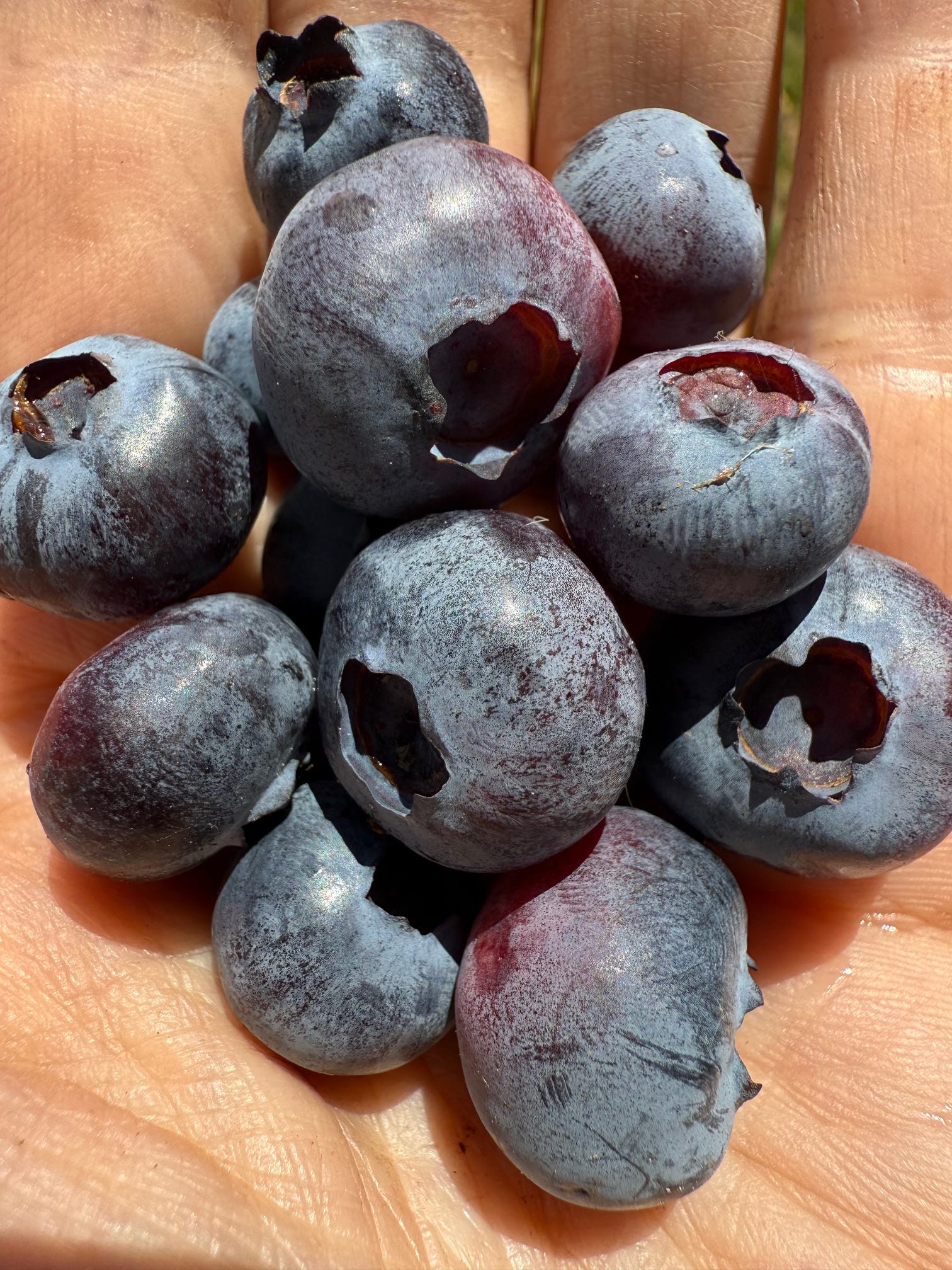
You know what else is a good source of anthocyanins?
Red wine (87 mcg/100mg).
Just sayin’.
Let me know if you buy some blueberry bushes in the comment area below. :)
Got those blueberries planted a last fall and have eaten a few already! Two earlies, 2 mid season, 2 late givers 🫐
🫶